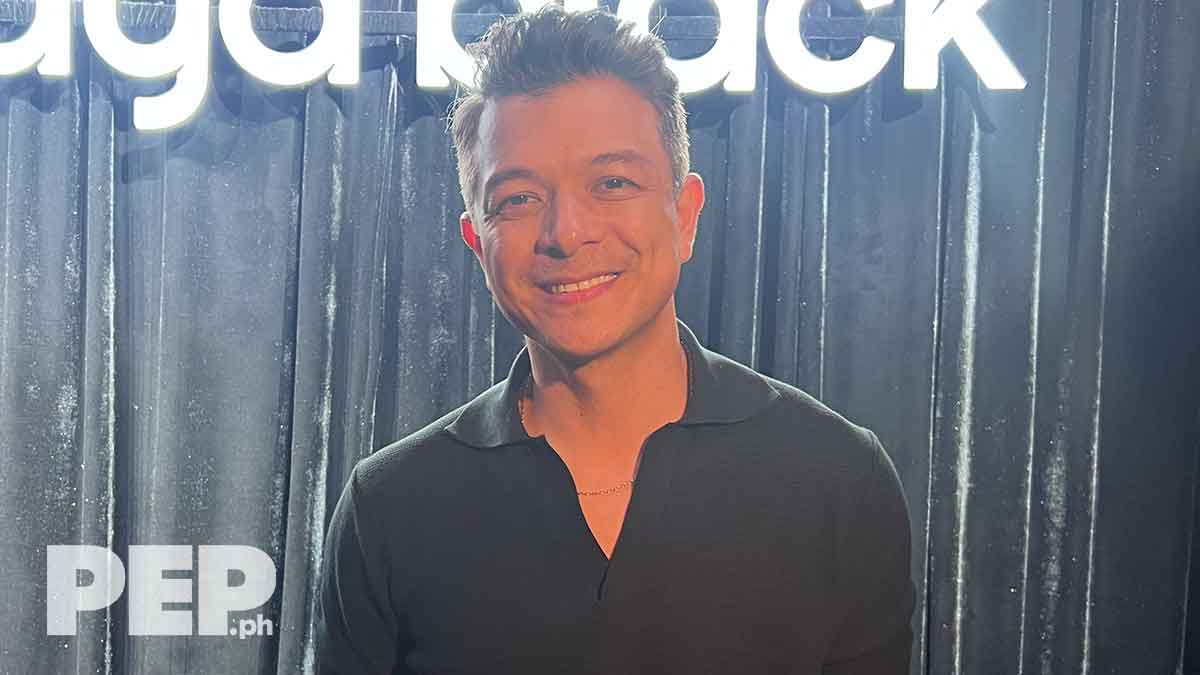


Jericho Rosales is feeling nothing but gratitude for the success of his latest film, Quezon.
On November 20, 2025, the award-winning actor looked back on his journey with the project during an interview with PEP.ph (Philippine Entertainment Portal) and other members of the press at the film’s victory party.
The celebration, hosted by Maya Black—with Jericho serving as an ambassador—was fittingly held at the Quezon Club in Solaire Resorts North, Quezon City.
“It’s just so very touching, alam niyo yun?
“It’s been a while since, you know, somebody has thrown a party for me or for the work that we have done.
“And just…Maya’s so supportive, super supportive. My 2025 has been, you know, Maya has been, like, there supporting not just me, but Quezon… [and] of course, you know, supporting cinema.
“So I’m so happy, so happy…”
The film enjoyed a successful run in theaters, screening for nearly two months following its premiere on October 15, 2025.
Its final showing took place on December 14, at Cinema 76 in Quezon City.
The film also reached audiences worldwide, with international screenings in the USA, New Zealand, Australia, the Middle East, to name a few.
But for Jericho, the journey with Quezon is far from over.
The team is now setting its sights on bringing it to schools nationwide, hoping to inspire and educate more students.
He revealed: “Mahaba pa yung biyahe. Mahabang-mahaba pa yung biyahe.
“Tagal na akong walang pelikula na umabot nang ganito katagal sa sinehan, but, it just shows that… it’s a very important film and people love it, people like it.”
Jericho said he is deeply thankful for the overwhelming support the film had received.
“They really found the time, carve the time para panuorin yung pelikula. They talked about it.
“They rewatched it. First time in my career that yung project ko, may mga tatlong beses na nanonood.
“So, thank you so much to, like, the most block screenings I’ve ever encountered.”
For Jericho, this means a great deal—especially at a time when promoting movies and convincing audiences to go to cinemas has become increasingly challenging.
He said: “It was so hard. Promoting a film nowadays is really hard. It’s like para kaming bumalik doon sa nagsisimula kami noong mga pino-promote ng mga movies noong ’90s, noong 2000s, 2010s.
“You know, it’s a mix of social media and just being present, going to the cinema, surprising everyone.
“But yung success nga ng Quezon has just made everything, you know, feel so worth it, worth it, worth it. Super, super. And so, thank you to everyone who made our film very successful.”
Read: Quezon: The Movie vs History
Despite its strong box-office performance—reportedly raking in PHP50 million within its first five days—the film also stirred controversy.
Read: Now Showing: Quezon, Walong Libong Piso, CineSilip movies
Critics slammed its depiction of President Manuel L. Quezon as manipulative, power-hungry, and womanizing, a portrayal that sharply contrasts with his image as an untarnished national hero.
Enrique “Ricky” Quezon-Avanceña, Quezon’s grandson, accused the film of distorting their family’s legacy.
His cousin, actor John Arcilla—known for his role as Heneral Luna in the first installment of the Bayaniverse—echoed the criticism.
Read: John Arcilla, nagbigay ng opinyon sa issue ng Quezon movie
In the wake of these criticisms, a widespread debate emerged—pitting artistic freedom against the responsibility to honor historical figures.
TBA Studios, the production company behind Quezon, stood firm, asserting that the film is “grounded in verified historical accounts.”
Some even said these controversies contributed to the film’s box-office success.
What’s his takeaway from all this?
Jericho dismissed the idea that negative publicity drove the film’s success.
Instead, he emphasized that what truly mattered was how the movie sparked curiosity and encouraged meaningful conversations among audiences.
“Jerrold [Tarog, director] and the rest of the team since day one of ‘Bayaniverse,’ e, expected naman na lahat ng mga ganyang bagay.
“It’s not like… it’s not that we identify it as nakatulong doon sa promo namin.
“But of course there is a, you know, like a conversation. There has been a conversation happening, and whatever happened was like a reaction to the reaction.
“Parang ganun yung nangyayari.”
Jericho further explained: “Of course, we respect, you know, feelings and emotions and reactions and comments, whatever it… whatever comments, good or bad, we read everything, we welcome everything.
“And it has made us wiser. Like I said in my last interview, made us, you know, more accepting, more open, more understanding.
“And as a filmmaker, as an actor, I feel like I’ve just been stretched and, and parang yung foundation ko ay mas tumibay na yung ganun, e, di ba?”
Criticisms aside, Jericho’s performance as the former president earned widespread praise, with many calling it so convincing that it deserves a Best Actor award.
Hearing these comments, Jericho said: “I really am happy that a lot of people… and the ones who really matter said that I gave justice to… the role, which I really, I really worked hard on achieving whatever you guys had seen in the film.”
When asked if he sees Quezon’s image in himself, Jericho answered: “I don’t think, I don’t think I am the image of Quezon.
“I think that… kasi yung, ako yung mas accessible na makikita nila, e. Pag ginoogle nila ngayon yung Quezon, mukha ko yung lalabas siguro o yung pelikula…
“But I hope that everyone who remembers or remembers me playing this character will remember all the good stuff that he has done.
“And what kind of a person he was, separate from being, you know, di ba, the politician and the person because it was everything.
“And he is not a perfect person. So I hope that everyone who remembers this, remembers this film will start digging deeper into, like, why and how and what made Quezon, Quezon.”
More than anything, the most meaningful feedback for Jericho came from viewers who found the film timely and relevant.
He expounded: “Ang galing ng buong cast, ang galing ng director, ang galing… ng script ng movie. Ang galing ng lahat—from cinematography to the screenplay to the acting. Lahat iyan.
“But it being timely was not something that we planned, and majority of the reviews and the comments were about kung ano yung nangyayari sa panahon ngayon.
“It’s like… I’m using Ben Alves’s words na, you know, it’s a blueprint sa kung ano yung nangyayari noon, di ba?
“Hindi siya patama sa isang tao, but it’s more of like what’s happening now and kinakausap din niya tayo bilang mamamayan na ano yung nangyayari? Ano yung ginagawa sa atin? Ano yung hinahayaan din natin na… hinahayaan na nagagawa sa atin?
“So if the people realize that, the conversation na nagsimula because they realized na kailangan nating harapin at aminin sa sarili natin na sama-sama tayo dito. Walang, walang isang side lang dito na ganun.
“For me, the movie became like a movement more than just a film, parang ganun.”
READ MORE:
About the Author